


DAYAN ABRAHAM
PERSONAL VIRTUAL EXHIBITION
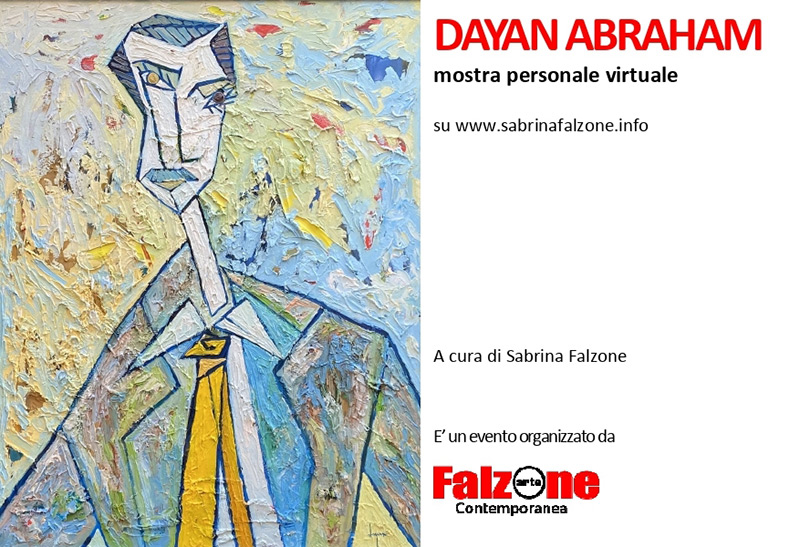
Where: Online on the official website www.sabrinafalzone.info and on the Facebook page
Dayan Abraham is a French artist, who lived in Paris and was born in Casablanca, Morocco, and has been painting with passion since the 1990s. From 1997 to 2004 he lived and worked in the United States, residing in Miami, Savannah and New York, where he painted many works.
He has always been positively influenced not only by Modigliani's artistic research and the geometric style of cubism, but also by Expressionism and Constructivism. However, he frees himself from these historical-artistic models to orient himself towards a more seraphic two-dimensionality and a style based on the concept of synthesis.
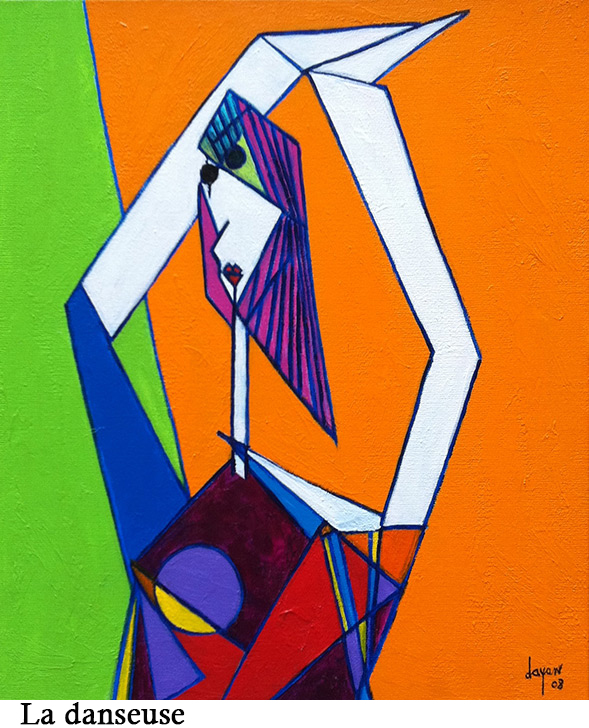
Expressionist drama is emptied of tragic content to replace it with a serene representation of reality, renewed in precise chromatic scansions. For example, observe the painting entitled “La danseuse”, painted with acrylic colors on canvas with marked contrasts and strong colors. There is an aspiration to formal balance in the depiction of geometric elements.
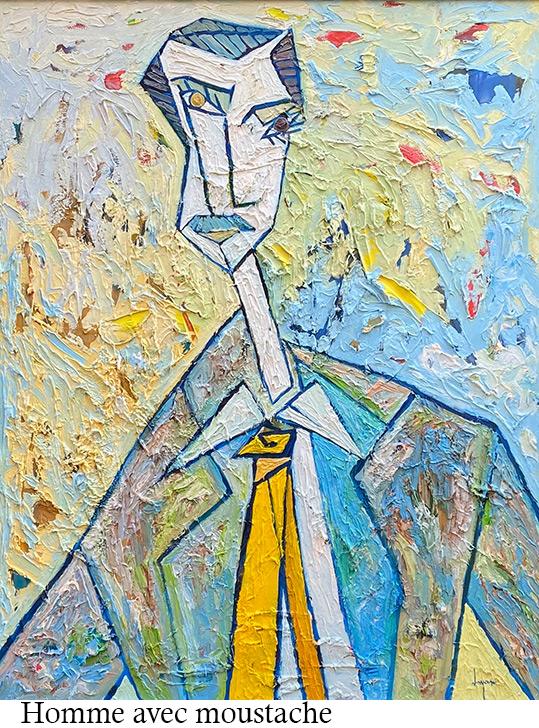
Dayan Abraham’s art is influenced by the cubist lesson in the work entitled “Homme avec moustache”, an oil on canvas with an extremely vibrant pictorial tone and visual harmony between cold and warm tones.
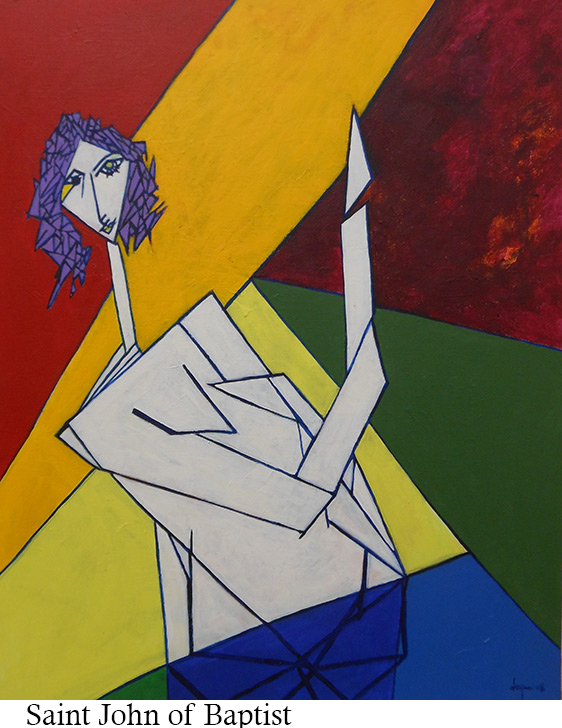
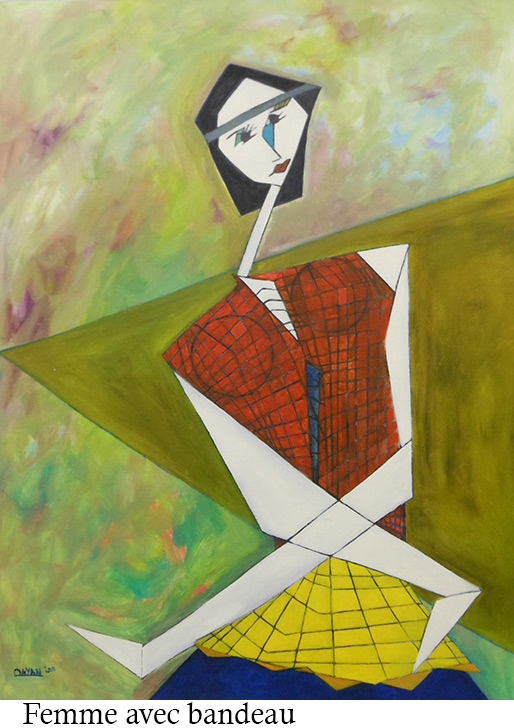
The twentieth-century style, which deformed reality, undergoes in Dayan Abraham a process of lengthening of the human figure that is very present in this pictorial cycle, especially in the canvases “Femme avec bandeau” and “Saint John of Baptist”, in which Modigliani’s lesson is evident in the typical representation of female figures.
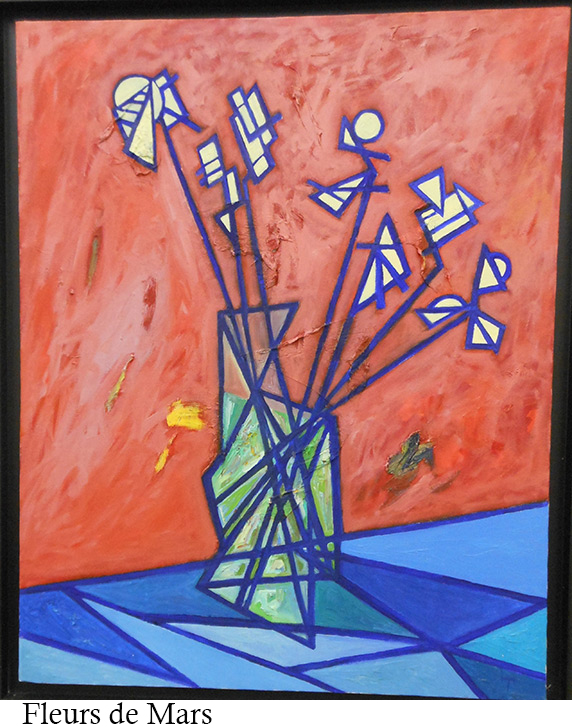
The formal geometries of the work “Fleurs de Mars” suggest an intent to deconstruct reality, of cubist flavor, with which objects are interpreted from various perspective angles, as if they were punctuated by suspending the space-time dimension. Through his painting, Dayan Abraham offers us the opportunity to travel with our gaze in contemporary art, recalling the lesson of the great masters of twentieth-century art history and transposing it on a more mitigated plane between shapes, colors and geometries in a pleasant relationship between present and past.
Sabrina Falzone, art critic and historian